Completed Projects and Programs

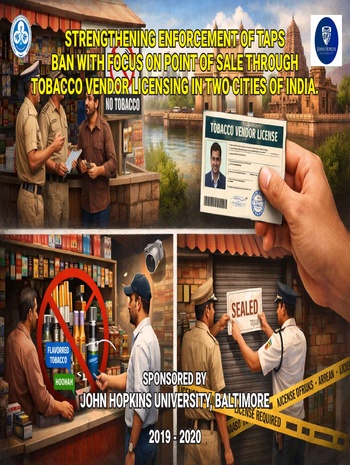
Strengthening Enforcement of Taps ban with focus on point of sale through Tobacco Vendor Licensing in two cities of India.

Strengthening Enforcement of Taps ban with focus on point of sale through Tobacco Vendor Licensing in two cities of India.

559 tobacco vendors were mapped in Ranchi and 367 in Siliguri. Tobacco vendor density was 68 vendors/km², 6 vendors/km, and 8 vendors/1000 population in Ranchi. While in Siliguri, the tobacco vendor density was 99 vendors/km², 5 vendors/km and 7 vendors/1000 population. 19% were (n=105) vendors observed in Ranchi and 23% (n=84) of vendors in Siliguri were located within 100-yards of one or more schools. The most common vendor-type in Ranchi was an independent store (58%) and that in Siliguri was a permanent kiosk (52%).
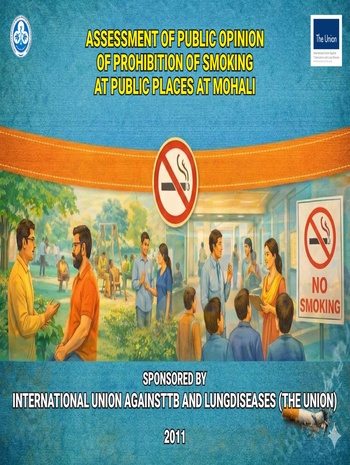
Assessment of public opinion of prohibition of smoking at public places at Mohali

Assessment of public opinion of prohibition of smoking at public places at Mohali

The objective of the study was to assess the public support for smoke free initiatives undertaken in Mohali District, Punjab. Almost one third of studied population perceive that smoking gives pleasure, 86% believes smoking is harmful for health, 68% perceive that costs related to smoking as economic burden to family. There appears to be good knowledge and strong public support for effective measures to reduce exposure to tobacco smoke in public places.
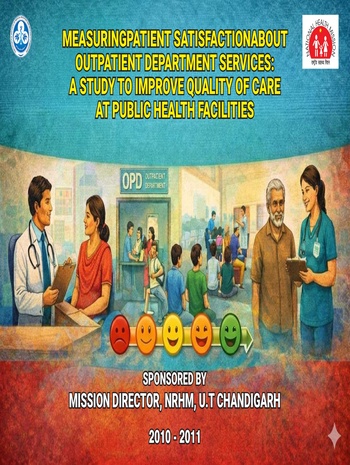
Measuring Patient Satisfaction about Outpatient Department Services: A Study to Improve Quality of Care at Public Health Facilities

Measuring Patient Satisfaction about Outpatient Department Services: A Study to Improve Quality of Care at Public Health Facilities

The objective of the study was to determine the level of user satisfaction with O.P.D. services in public health facilities of Chandigarh. Overall patients’ satisfaction on various parameters of quality of care was 86% (sub centre- 95%, dispensary- 89.5%, CHC- 87.7%, GH- 83.8% and polyclinic-82%). Overall satisfaction score was significantly and positively associated with accessibility, waiting time, availability of manpower, physician’s behaviour and basic amenities.
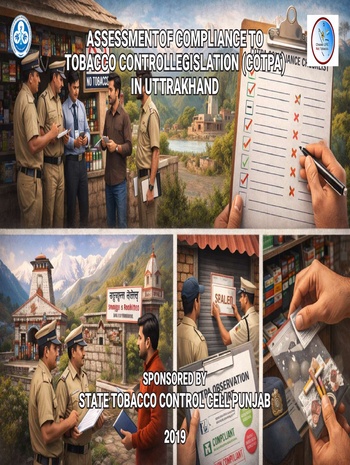
Assessment of Compliance to Tobacco Control Legislation (COTPA) in Uttrakhand

Assessment of Compliance to Tobacco Control Legislation (COTPA) in Uttrakhand

State control cell, Government of Uttrakhand
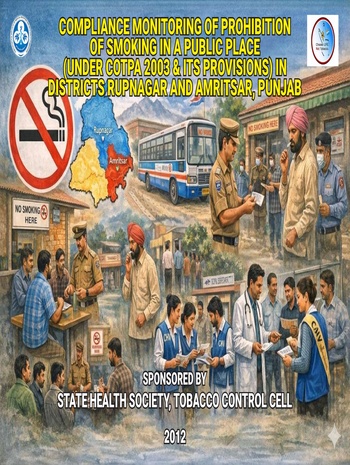
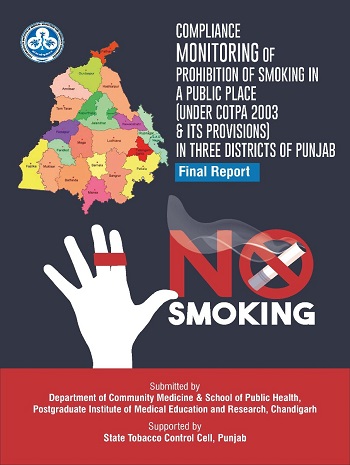
Compliance monitoring of prohibition of smoking in a public place (under COTPA 2003 & its provisions) in districts Rupnagar and Amritsar, Punjab

Compliance monitoring of prohibition of smoking in a public place (under COTPA 2003 & its provisions) in districts Rupnagar and Amritsar, Punjab

The objective of the study was to assess compliance to section-4 of COTPA in three districts of Punjab. No active smoking was observed at 92.1% public places and 80.1% of places had displayed “No smoking” signage in Rupnagar district. The comparatively higher number of active smokers (14.7%) and cigarette/bidi stubs (83.3%) was observed at transit sites, whereas least smoking activity was observed in health institutions (1.6%). In Amritsar district, absence of active smoking and presence of signages was observed in 95.0% and 76.5% public places respectively.
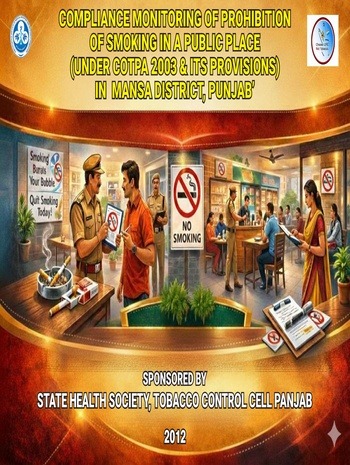
Compliance monitoring of prohibition of smoking in a public place (under COTPA 2003 & its provisions) in Mansa district, Punjab

Compliance monitoring of prohibition of smoking in a public place (under COTPA 2003 & its provisions) in Mansa district, Punjab

The objective of present study was to assess compliance to prohibition of smoking in a public place (under COTPA 2003 & its provisions) in Mansa district of Punjab. Absence of active smoking and presence of ‘No Smoking’ signages was observed in 92.3% and 75.8% public places respectively. Moreover, there was high knowledge about deleterious effects of smoking among residents and a high support for implementation of strict smoke free law. Based on our results, government of Punjab declared Mansa district as ‘Smoke Free District’.
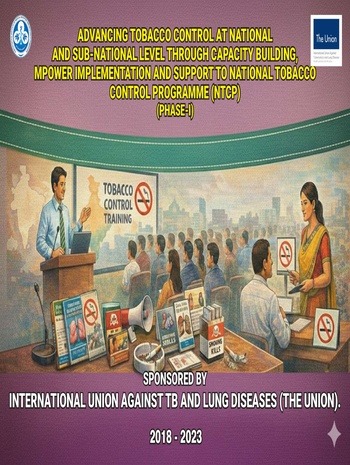
Advancing Tobacco control at National and Sub-National level through capacity building, MPOWER implementation and support to National Tobacco Control Programme (NTCP) (Phase-I)

Advancing Tobacco control at National and Sub-National level through capacity building, MPOWER implementation and support to National Tobacco Control Programme (NTCP) (Phase-I)

Baseline assessment of institutional mechanism of tobacco control, MPOWER and COTPA status of project states was done, a web-based portal “E-Resource Centre for Tobacco Control” (www.rctc.org) for tobacco control was developed and also networking with stakeholders in focused states for strengthening TC program was done. Published bi-monthly theme-based newsletter “Tobacco free Times”. Various webinars and seminars were conducted for wider distribution of Tobacco control across country.
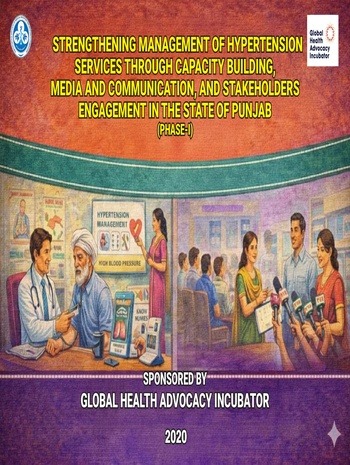
Strengthening Management of Hypertension Services through capacity Building, Media and Communication, and Stakeholders Engagement in the State of Punjab (Phase-I)

Strengthening Management of Hypertension Services through capacity Building, Media and Communication, and Stakeholders Engagement in the State of Punjab (Phase-I)

Mapping and engaging of elected representatives and bureaucratic ranks at district and state level was done to place hypertension on a priority list of the state government. We liasoned with over 15 reputed media houses which resulted in the publication of 96 news articles (print and digital media). 'Hub and Spokes' model was followed to promote the telemedicine services at HWC. State government which has been highlighted in a global seminar as 'Lessons from political victories- case study of Punjab, India'. Further state government has nominated 'Transfat free Diwali Campaign' launched under the project under 'Best Practices' for Skoch Award. We also launched a 'Resource centre for Cardiovascular Health' ‘www.rccvh.org’, bimonthly theme-based newsletter 'Cardio-Health' (n=4 editions) and seven policy focused manuscripts.
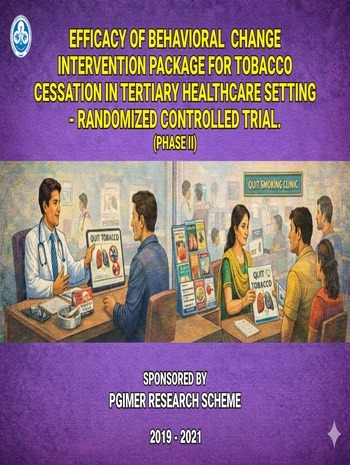
Efficacy of behavioral change intervention package for tobacco cessation in tertiary healthcare setting- Randomized Controlled Trial. (Phase II)

Efficacy of behavioral change intervention package for tobacco cessation in tertiary healthcare setting- Randomized Controlled Trial. (Phase II)

The study aims to undertake formative and summative research on cost effective intervention addressing tobacco use in tertiary healthcare settings. Based on the social learning theory behavioral change package will be used to address the change in tobacco use status.

Primary outcome of the study will be to biochemically verify continuous tobacco abstinence at 12 months.

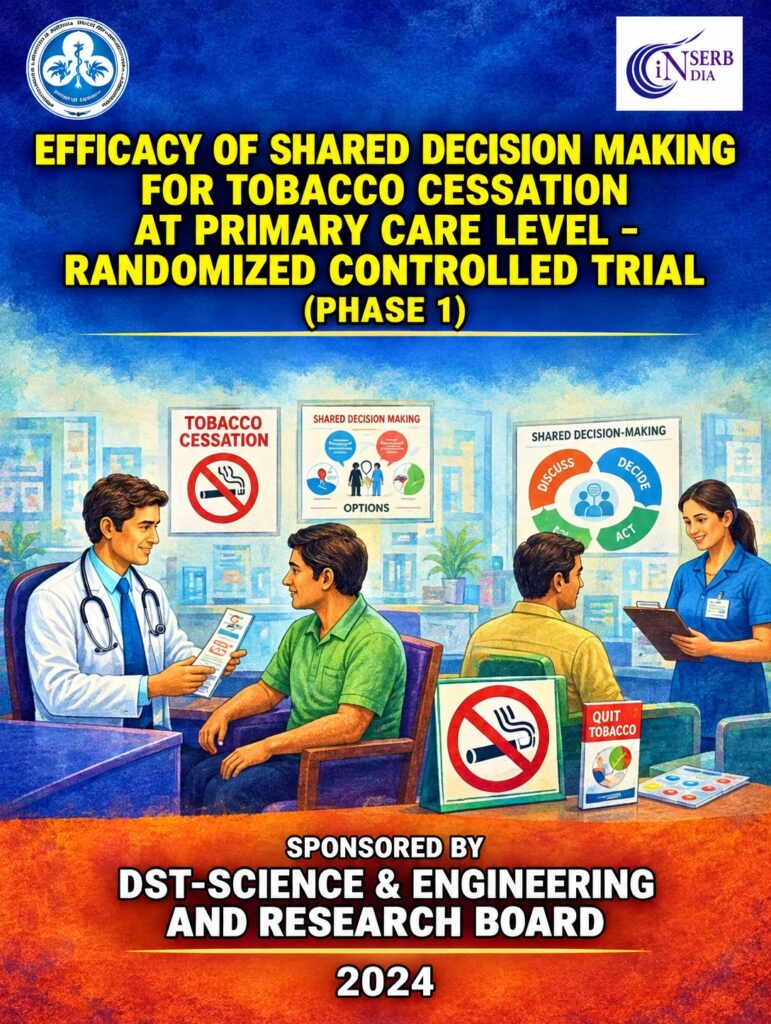
Efficacy of shared decision making for tobacco cessation at primary care level  –  randomized controlled trial(Phase 1)

Efficacy of shared decision making for tobacco cessation at primary care level – randomized controlled trial(Phase 1)

This project aims at determining the feasibility and effectiveness of a SDM strategy delivered at the primary or secondary healthcare in improving tobacco abstinence and   patient-reported   outcomes,   such   as improved engagement and satisfaction. The trial will be conducted at three healthcare facilities in the Ambala, Haryana.
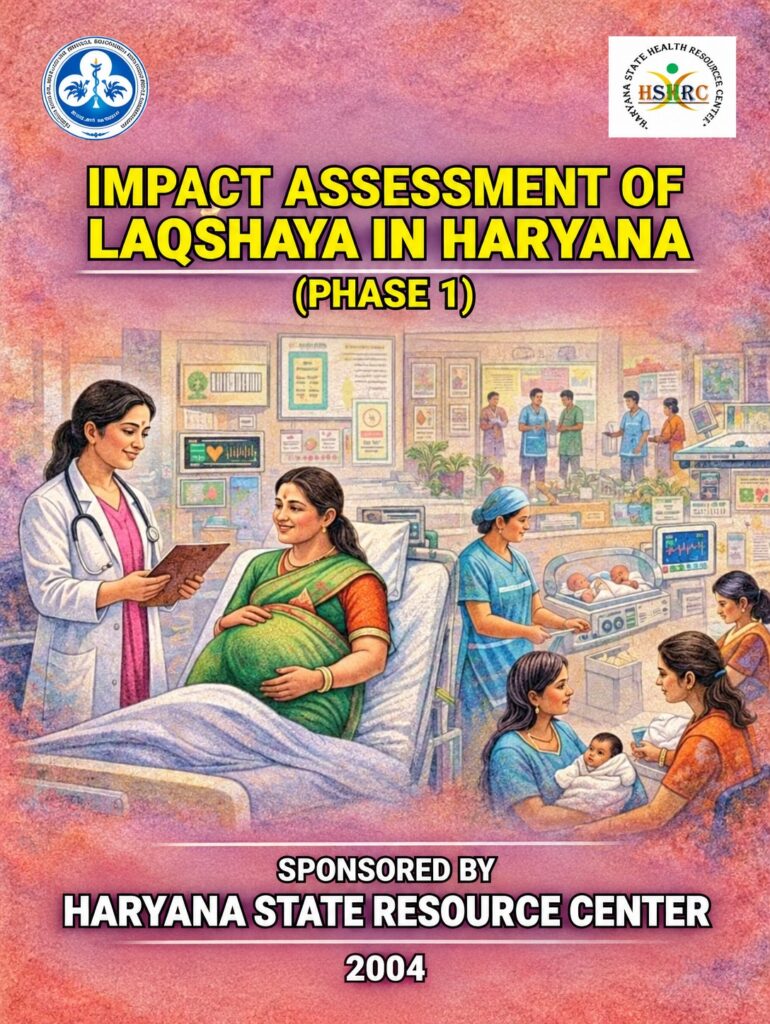
Impact assessment	of LaQshaya in Haryana (Phase 1)

Impact assessment of LaQshaya in Haryana (Phase 1)

The project aims to assess the reduction in maternal and newborn morbidity, as well as the quality of care and maternity services following the implementation of Labor Room Quality Improvement Initiative in 11 healthcare facilities in Haryana. Through the project, quantitative and qualitative data shall be collected from healthcare workers and patients receiving care in certified labor rooms and operation theaters in the 11 healthcare facilities ofHaryana.
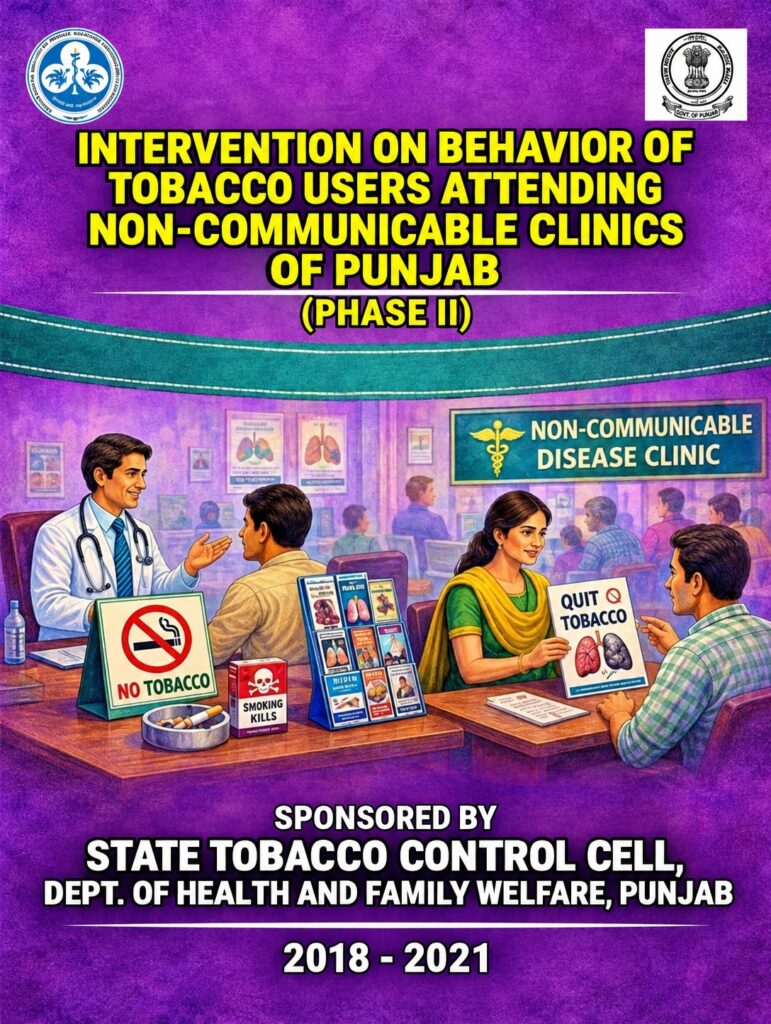
Intervention on Behavior of Tobacco Users attending Non-Communicable Clinics of Punjab. (Phase II)

Intervention on Behavior of Tobacco Users attending Non-Communicable Clinics of Punjab. (Phase II)

The study aims to assess the behavioral approaches for tobacco cessation in non-communicable disease clinics. In the study booklet will be developed to equip and enhanced the knowledge and skills of health professionals working in NCO clinics and for patients information material, text messages, motivational videos will be provided to improve the cessation rate and to improve the quality of life with better health outcome of patients, contributing in achieving the SDGs
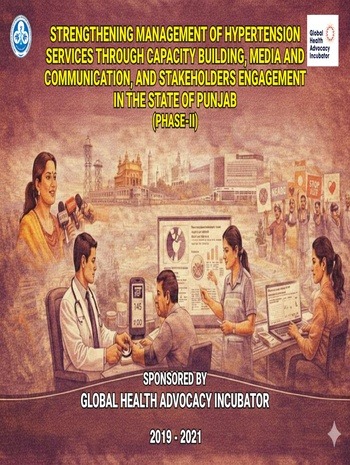
Strengthening Management of Hypertension   Services through	capacity Building, Media and Communication,		and Stakeholders Engagement in the State of Punjab.(Phase II)

Strengthening Management of Hypertension Services through capacity Building, Media and Communication, and Stakeholders Engagement in the State of Punjab.(Phase II)

The overall purpose of phase-1 of the project is to strengthen politico-institutional framework of Indian Hypertension Management Initiative (IHCI) in the State of Punjab through capacity building, media and communication, and stakeholders engagement.
Evaluation	of	National Tobacco Quitline Services

Evaluation of National Tobacco Quitline Services

The study employed a mixed methods approach to assess the effectiveness of NTQLS. This involved a retrospective analysis of NTQLS data spanning from July 2016 to December 2022, alongside qualitative and quantitative analyses of both users' and service providers' perspectives. Meetings were arranged with directors from WHO and NTQLS at four different locations. Study tools were devised, and data collection commenced, incorporating a total of four Focus Group Discussions (FGDs), nineteen In-Depth Interviews (IDIs), and completion of 320 surveys. The results of the evaluation unveiled high levels of caller satisfaction with the counseling services provided by NTQLS counselors. Additionally, callers expressed gratitude towards the efforts made by the Government of India in this regard.
Conducting an umbrella review on impact of Electronic Nicotine Delivery system (ENDS) on health and its efficacy and safety on tobacco cessation

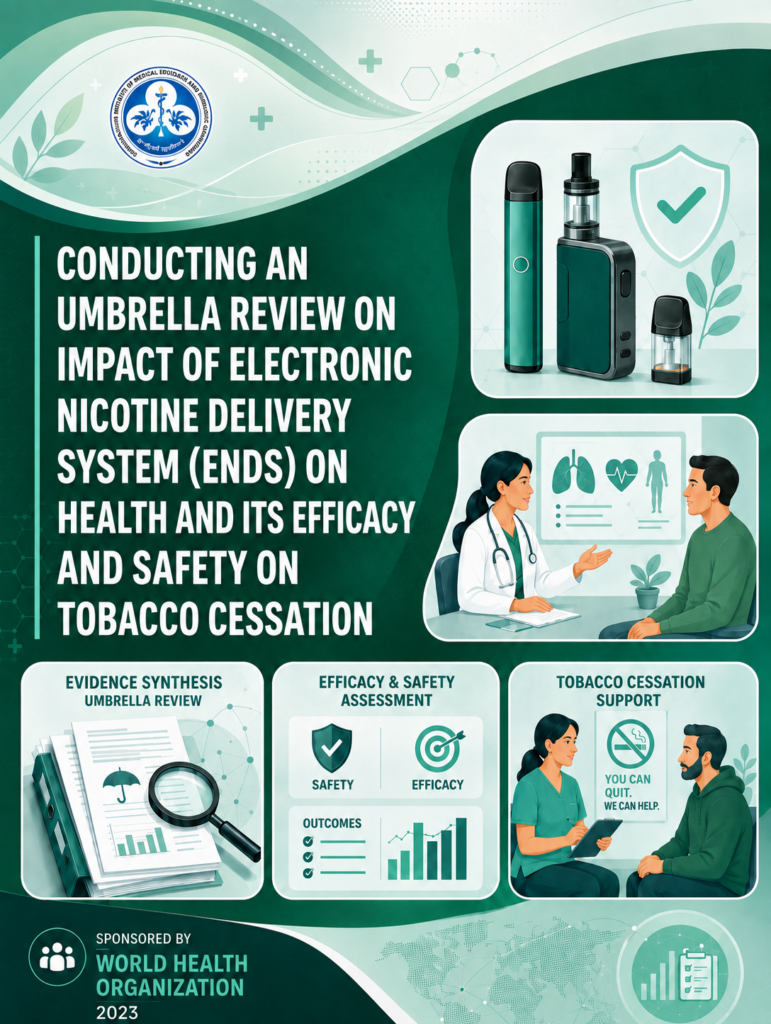
Conducting an umbrella review on impact of Electronic Nicotine Delivery system (ENDS) on health and its efficacy and safety on tobacco cessation

The umbrella review on electronic nicotine delivery systems (ENDS) assessed their safety, efficacy, and health impacts by synthesizing evidence from multiple systematic reviews and meta-analyses. Examined a broad spectrum of studies, it evaluated the diverse range of ENDS products, including e-cigarettes and vape pens, to elucidate their effects on users. The review scrutinized potential adverse health outcomes, such as respiratory issues, cardiovascular diseases, and addiction, alongside exploring ENDS' role in smoking cessation. By consolidating findings from various sources, this comprehensive analysis aimed to provide policymakers, healthcare professionals, and the public with an informed perspective on ENDS utilization and its implications for public health.

Advancing Tobacco control at National and Sub-National level through capacity building, MPOWER implementation and support to National Tobacco Control Programme (NTCP) (Phase-II)

Advancing Tobacco control at National and Sub-National level through capacity building, MPOWER implementation and support to National Tobacco Control Programme (NTCP) (Phase-II)

Successful establishment of a dedicated committee to implement Article 5.3 of the WHO FCTC in Puducherry and Meghalaya. This initiative facilitated institutional mechanisms for tobacco control, including signage installations, training sessions, and the formation of SLCC and DLCC across 11 out of 14 intervention districts. Additionally, 18 physical workshops and 40 webinars were conducted, resulting in vital policy formulations and over 329 one-on-one meetings with high-level officials. Moreover, 20 state and district-level circulars were issued to strengthen enforcement of the NTCP and COTPA. The E-RCTC Portal was updated with 1300+ circulars, 40+ publications, and 100+ IEC materials, garnering global viewership. The comprehensive efforts recognized by the WHO Regional Director's Special Recognition Award in 2022.
Mapping Public Health Education Training in India: Institutions & Courses

Mapping Public Health Education Training in India: Institutions & Courses


The study undertook mapping of public health education training in by internet search followed by personal interview of head of institution related course faculty. All the courses were affiliated with some university. The courses ranged from MD Community Medicine, Masters in Public Health, Masters in Hospital Administration, Msc Statistics, Msc nursing, M Phil, PHD Sociology etc.
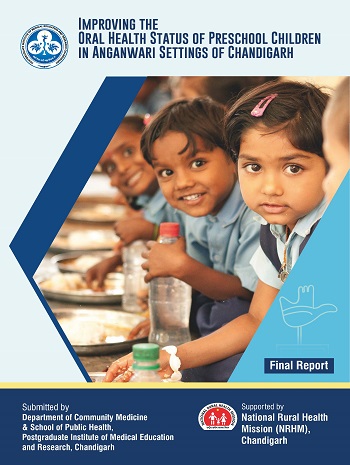
Improving the Oral Health Status Of Pre-School Children in Anganwari Settings of Chandigarh

Improving the Oral Health Status Of Pre-School Children in Anganwari Settings of Chandigarh

Prevalence of caries in children aged 3-6 years in anganwaris of Chandigarh was 48.3%. Overall knowledge score of AWWs in both the projects increased significantly post- intervention, however, the increase in skills was significantly more pronounced in skill based package. Caries susceptibility (by Snyder test) among children decreased from 48.2% pre-intervention to 31.2% post- intervention.
Impact of First Aid Training to Students on their Knowledge and Skills

Impact of First Aid Training to Students on their Knowledge and Skills

A training manual on 40 common childhood illnesses ‘Swasthya Chalisa’ was prepared. There was a statistically significant increase in level of knowledge (33%) and skills (135%) in Group B (manual plus on-the-spot demonstration training sessions) than Group-A (manual only)
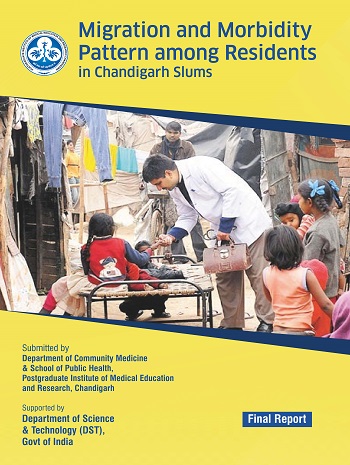
Migration and Morbidity Pattern among Residents in Chandigarh Slums

Migration and Morbidity Pattern among Residents in Chandigarh Slums

Most migrants (90%) in slums of Chandigarh belonged to Bihar and Uttar Pradesh. 48.5% households have no access to any toilet facility, 8% children (12-23 mths) un-immunised. Fever (25.8%), abdominal pain (12.9%), cough (17.6 %) and diahorrea (6.5%) were most common acute morbidities while hypertension (15.2%), abdominal pain (10.7%) were common chronic morbidities.
Knowledge and Skills of Health Service Providers and	Immunization Programme Assessment in U.T Chandigarh

Knowledge and Skills of Health Service Providers and Immunization Programme Assessment in U.T Chandigarh

Median knowledge scores of medical officers and health workers were around 60%. Median skill score of health workers was higher (88%) than the medical officers (60%).
Evaluation of two key strategies under NRHM (Delivery hut Scheme) and 24 x 7 ambulance services for promoting institutional deliveries in Haryana

Evaluation of two key strategies under NRHM (Delivery hut Scheme) and 24 x 7 ambulance services for promoting institutional deliveries in Haryana

Around 80% of respondents were aware while 70% were able to access delivery hut scheme. One third choose this service as it was easily accessible while 70% stated delivery hut services were available even in the odd hours of night. Around half (47.5%) reported ambulance condition was good, however, only 20% were happy about the behavior of ambulance staff.
(Funding Agency : PGIMER Research Scheme)

(Funding Agency : PGIMER Research Scheme)

Evaluation of Janani Suraksha Yojana Scheme in improving the proportion of institutional delivery in U.T Chandigarh

Evaluation of Janani Suraksha Yojana Scheme in improving the proportion of institutional delivery in U.T Chandigarh

High level of knowledge about JSY program amongst the beneficiaries and basic health care providers was found, however, only one third (38.6%) of beneficiaries had uptake of JSY services.
Evaluation of Comprehensive Epilepsy Education Programme for School Teachers in Chandigarh City, India

Evaluation of Comprehensive Epilepsy Education Programme for School Teachers in Chandigarh City, India

A booklet (in Hindi and English language) for school teachers and students was published and distributed. The skill based training of students and teachers of all (n=104) schools across Chandigarh was imparted. There was statistically significant effect of intervention on their knowledge and skills. The cascading effect in form of skits, lectures, plays across different schools in Chandigarh on epilepsy was observed. (Funding Agency: PGIMER Research Scheme)
Development	and Evaluation	of Comprehensive Epilepsy Education Programme for Chandigarh City, India

Development and Evaluation of Comprehensive Epilepsy Education Programme for Chandigarh City, India

Knowledge about epilepsy was quite poor among the students of Chandigarh. The level of knowledge was almost similar among slums, urban and rural areas. An epilepsy educational programme for school children of Chandigarh was developed and distributed to selected schools of city.
Compliance Monitoring of Prohibition of Smoking in Public Places (under Indian Smoke Free Legistlation) in five districts	(Patiala, Ferozpur,		Faridkot, Fazilka and Jalandhar) of Punjab

Compliance Monitoring of Prohibition of Smoking in Public Places (under Indian Smoke Free Legistlation) in five districts (Patiala, Ferozpur, Faridkot, Fazilka and Jalandhar) of Punjab

The overall compliance of Patiala, Ferozepur, Faridkot, Fazilka and Jalandhar districts are 85.2%, 89.5%, 96.9%. 88.9% and 87.6% respectively. Moreover, active smoking was not found in over 98% public places in all the districts. (Funding Agency: Tobacco Control Cell, Punjab)
Compliance Monitoring of Prohibition of Smoking in a Public Place (under COTPA act) in Mohali, Punjab

Compliance Monitoring of Prohibition of Smoking in a Public Place (under COTPA act) in Mohali, Punjab

The study concluded that overall compliance rate in all the selected public places of Community Development Blocks of Mohali was between 88-100%.
Compliance monitoring of prohibition of smoking in a public place (under COTPA 2003 & its provisions) in Three districts (Gurdaspur, Bhatinda & Nawanshahar) of Punjab, Punjab

Compliance monitoring of prohibition of smoking in a public place (under COTPA 2003 & its provisions) in Three districts (Gurdaspur, Bhatinda & Nawanshahar) of Punjab, Punjab

The overall compliance of Nawanshahr, Bathinda and Gurdaspur districts are 87.9, 74.5 and 88.5% respectively. However, active smoking was not found in over 95% public places in all the districts. (Funding Agency: Tobacco Control Cell, Punjab)
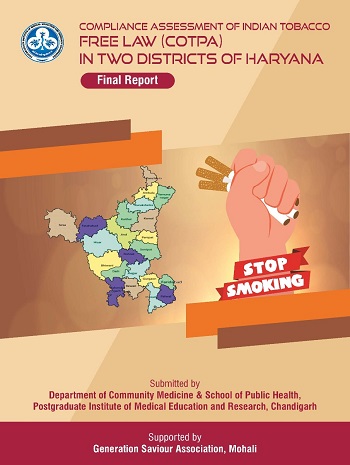
Compliance assessment of Indian tobacco free law (COTPA) in two districts of Haryana

Compliance assessment of Indian tobacco free law (COTPA) in two districts of Haryana

The overall compliance to COTPA was 53.3% and both districts were 50% compliant with respect to mean of major compliance indicators for all sections. The poor compliance (28.5%) were observed for section -5 whereas good compliance were observed for section 7,8,9 (71.7%) and section 4 (65.7%). Ambala was more compliant to all sections than Kurukshetra (except section 7, 8& 9).
Comparison of the Impact of a Lifestyle Intervention Package	on	the Salutogenic Potential and Health		Promoting Lifestyle of Manipuri and Non-Manipuri University Graduate Students in a North Indian City

Comparison of the Impact of a Lifestyle Intervention Package on the Salutogenic Potential and Health Promoting Lifestyle of Manipuri and Non-Manipuri University Graduate Students in a North Indian City

In a two group RCT conducted amongst students, Group A (received training on lifestyle intervention package viz. physical exercise, dietary assessment and modification, yoga, spiritual orientation, philanthropy work PLUS manual) fared better in terms of BMI, waist circumference, dietary habits, physical activity and SOC score than group B students (received only manual).
Assessing	 Compliance with	Smoke-Free Legislation	in Ahmadabad,	Chennai, Delhi and Mizoram in India

Assessing Compliance with Smoke-Free Legislation in Ahmadabad, Chennai, Delhi and Mizoram in India

The overall compliance of Patiala, Ferozepur, Faridkot, Fazilka and Jalandhar districts are 85.2%, 89.5%, 96.9%. 88.9% and 87.6% respectively. Moreover, active smoking was not found in over 98% public places in all the districts.
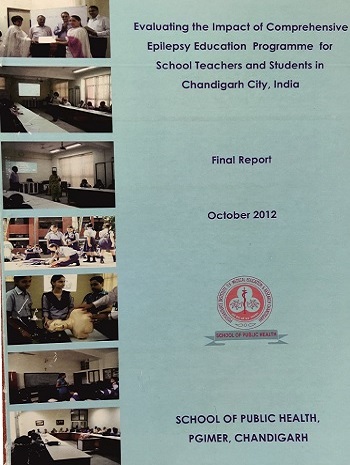
Evaluating the impact of Comprehensive Epilepsy Education Programme for School Teachers and Students in Chandigarh City, India

Evaluating the impact of Comprehensive Epilepsy Education Programme for School Teachers and Students in Chandigarh City, India

A self-instructional training manual on epilepsy was developed and published in Hindi ‘Mirgi ke bare main samanye tathye’ and English ‘Epilepsy and its Management’ language. The end line knowledge and skills assessment was done after 2 months of administration of package, which resulted in statistical increase in their knowledge and skills.
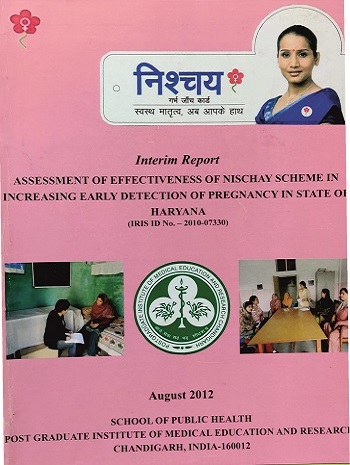
Interim Report: Assessment		of effectiveness of Nischay Scheme (provision of pregnancy detection kit) in early detection of pregnancy in State of Haryana

Interim Report: Assessment of effectiveness of Nischay Scheme (provision of pregnancy detection kit) in early detection of pregnancy in State of Haryana

Awareness about this Nischay scheme amongst beneficiaries of district Panchkula was low, but high in Hisar. All the beneficiaries who were aware of the scheme had utilized Nischay kit and even advised their peers to use. There was no significant change in ANC parameters after launch of Nischay Scheme in both districts.
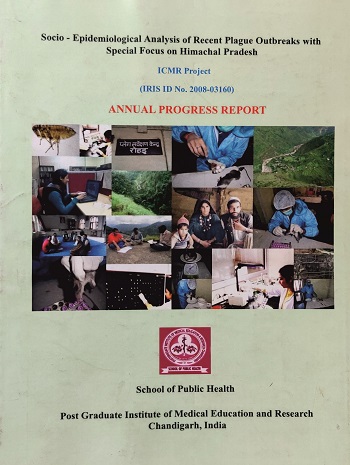
Socio-epidemiological Analysis of Recent Plague Outbreaks in India with special focus on Himachal Pradesh

Socio-epidemiological Analysis of Recent Plague Outbreaks in India with special focus on Himachal Pradesh

Overall 243 rodents and 57 fleas from HP and 20 rodents and 85 fleas from Surat were collected. Sylvatic cycle was elucidated. The results shows intermixing in rat and flea species between wild and domestic areas. Further, the relationship of certain climatic variables and soil with plagues was established.
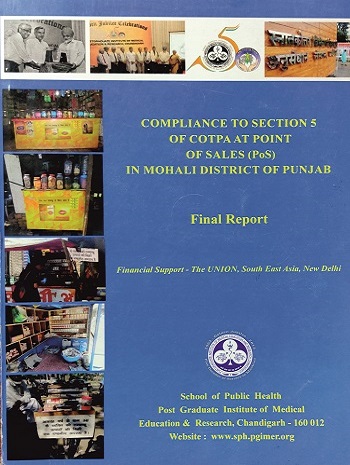
Assessment	of Compliance of prohibition of advertisement at ‘Point of Sale’ as defined under Section-5 of COTPA 2003 and subsequent rules in District Mohali, Punjab

Assessment of Compliance of prohibition of advertisement at ‘Point of Sale’ as defined under Section-5 of COTPA 2003 and subsequent rules in District Mohali, Punjab

Violation to Section 5 of COTPA was observed in nearly half of the surveyed Point of Sale (POS). Violation was comparatively less for promotional advertisement parameters (22.8%) and more for health warning parameters (82.2%). Violation was more in rural area, permanent shops and shops, which did not have tobacco as major business as compared to urban, temporary kiosks and other shops respectively.
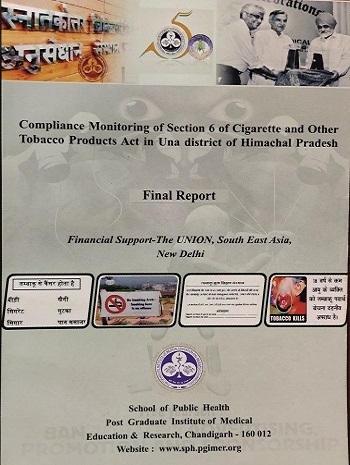
Compliance		Monitoring of Section 6 of Cigarette and	Other			Tobacco Products Act in Una district of Himachal Pradesh

Compliance Monitoring of Section 6 of Cigarette and Other Tobacco Products Act in Una district of Himachal Pradesh

One-fifth vendors displayed appropriate signage’s at Point-of-Sale, where-as Section 6 (b) stating ‘prohibition on sale in radius of 100 yards’ was displayed at 59% of educational institutions, more in urban as compared to rural area. The vendors were selling tobacco products (around 1/4th) within 100 yards of institute’s boundary. There was no visible sale of tobacco products in the campus.
Development of Nehru Hospital, Post Graduate Institute of Medical Education & Research, Chandigarh as a Health Promoting Hospital

Development of Nehru Hospital, Post Graduate Institute of Medical Education & Research, Chandigarh as a Health Promoting Hospital

The major activities performed under the project were constitution of a health promotion committee at institute and a health promotion cell comprising of senior functionaries. Besides, survey of employees, training programmes on HPH, workshops on BMWMs and seminar on Information, Education and Communication (IEC) on HPH and subsequent display of material were done.
Evaluation of Janani Suraksha Yojana Scheme in improving the proportion of institutional delivery	in	U.T Chandigarh

Evaluation of Janani Suraksha Yojana Scheme in improving the proportion of institutional delivery in U.T Chandigarh

High knowledge about JSY amongst beneficiaries and health care providers was found, however, only one third (38.6%) had uptake of JSY services. The main reasons reported for choosing delivery under JSY were faith on service providers, while receipt of a meagre amount, delay in disbursement and poor accessibility were the barriers.
Assessment of approaches and factors in increasing attraction and improving retention of physicians in rural and remote areas of India.

Assessment of approaches and factors in increasing attraction and improving retention of physicians in rural and remote areas of India.

The research conducted has identified the major factors that have led to the acute shortage of medical professionals in India. It highlights the motivational factors that underpin medical students’ selection of medical studies and also the encouraging and discouraging factors affecting the interest of medical students and medical doctors in working in rural areas from 4 major North Indian states.
Impact of integrated health program package on health service delivery in Shahzadpur		Block, Haryana

Impact of integrated health program package on health service delivery in Shahzadpur Block, Haryana

An Integrated Health Program Package (IHPP) was developed under the project based upon their training needs which consists of a comprehensive module for health workers on major national health programs along with 12 video films on national programs. This pre-post interventional study found a statistical increase in knowledge and skills of health workers on various national health programs after implementation of package.
Vendor’s compliance to ban on sale of chewable tobacco and loose cigarettes in Three Districts of Punjab.

Vendor’s compliance to ban on sale of chewable tobacco and loose cigarettes in Three Districts of Punjab.

Majority of vendors were compliant to ban on painting kiosks with tobacco advertisements and very less number of vendors were found selling tobacco products to the minors. Minimal numbers of vendors were found selling E-cigarette and a high percentage of vendors felt that the ban was giving a positive response.
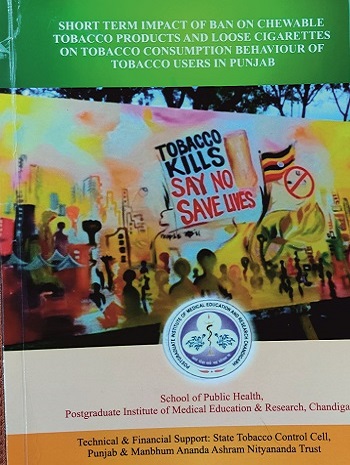
Short term impact of ban on chewable tobacco products and loose cigarette on tobacco consumption behavior of tobacco users in Panjab.

Short term impact of ban on chewable tobacco products and loose cigarette on tobacco consumption behavior of tobacco users in Panjab.

Nearly two-third of population were aware about tobacco ban in the state and majority (90%) supported the on-going ban on the tobacco products. 98.3% smokers found no difficulty in buying loose cigarettes from point of sale and merely 0.7% users felt that ban helped them quit smoking.
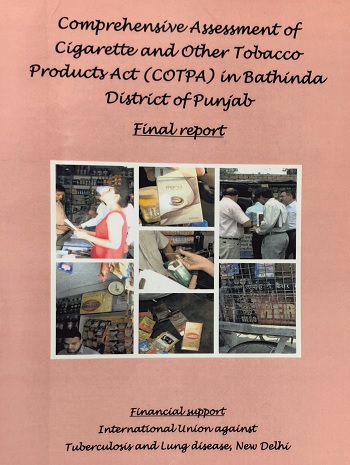
Comprehensive Assessment of Cigarette And	Other	Tobacco Products Act (COTPA) in Bathinda	District	of Punjab

Comprehensive Assessment of Cigarette And Other Tobacco Products Act (COTPA) in Bathinda District of Punjab

An overall compliance to Section 4 of COTPA in Bathinda district was 88.3%. No active smoking, no cigarette and no bidi buts and no smoking aids were found at 98.6%, 87.5% and 94.1% of the public places respectively. At 91.3% of public places, no advertisement of tobacco products at POS was observed. The compliance to selling of loose cigarette was 66.3% and compliance to Section 6(a) of COTPA was 41.4%.