26th May, 2026
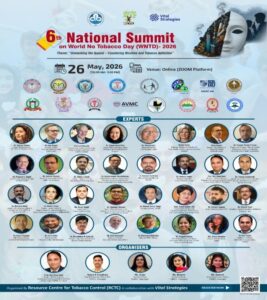 The Summit featured two keynote addresses, three panel discussions, and the release of two publications. Panel I, chaired by Smt. Preeti Sudan, Former Union Health Secretary, and Dr. L. Swasthicharan, Deputy Director General, Directorate General of Health Services, and moderated by Prof. Sonu Goel, brought together seven international experts to examine global tobacco control successes under the MPOWER framework and discuss the growing threat posed by electronic nicotine delivery systems (ENDS), heated tobacco products (HTPs), and nicotine pouches. Panel II, chaired by Dr. Rakesh Gupta and Dr. Pankaj Chaturvedi, highlighted the persistent gap between India’s tobacco control legislation and its implementation on the ground. Experts expressed concerns regarding the increasing use of digital marketing, surrogate advertising, and the cultural normalization of tobacco use, particularly among young people. The discussions emphasized the need for stronger enforcement mechanisms, enhanced surveillance of emerging products and promotional strategies, and sustained multisectoral efforts to safeguard public health.